If you’ve ever walked onto a busy manufacturing floor, a sprawling warehouse at 2 a.m., or a food distribution center where temperature controls mean the difference between fresh and spoiled goods, you know one thing: no two operations are the same. Last year, a craft bakery client reached out to me frustrated with standard material handling equipment. Their existing roller conveyors were too wide to fit the narrow aisles of their new production facility, and the standard pallet jacks they’d rented couldn’t navigate the wet, non-slip flooring around their mixers. “Every machine we buy feels like it’s made for someone else,” they’d said. That’s a complaint I hear all the time, and it’s why my team and I spend most of our days questioning a myth that’s stuck around for decades: that material handling equipment is one-size-fits-all. The short answer is yes, material handling equipment absolutely can be customized to specific operational needs—and doing so doesn’t just make work easier; it makes entire supply chains more efficient, safer, and profitable. Material Handling Equipment
Let’s start with the basics, because custom material handling isn’t just “adding a logo” or swapping out a standard part. Customization is tailoring every detail of a machine to solve a unique pain point, and that starts with sitting down with clients before we ever design a single part. For example, a pharmaceutical company recently approached us dealing with vial handling: their standard automated conveyors were damaging delicate glass vials, causing 7% of their product to break during transport. When we visited their facility, we learned their vials were only 2 inches tall, compared to the 4-inch vials the standard conveyors were built for, and their production line moved at a faster speed than industry averages. We didn’t just swap out rollers. We designed a modular conveyor with adjustable, low-friction rubber rollers spaced specifically for their vial size, plus a soft edge guard that catches every vial if it veers off course. We also calibrated the speed control system to match their line’s unique pace, eliminating the jostling that caused breaks. Six months after installation, their break rate dropped to under 0.5%, and their line’s output increased by 12% because they no longer had to stop to clear broken glass. That’s the kind of customization that changes operations—not just tinkering with a part.
Another area where customization shines is in environments that have strict, non-negotiable requirements. Take cold storage warehouses, for example. A client in the frozen food industry was struggling with standard forklifts that lost traction on their icy loading docks, and standard pallets that absorbed moisture, causing them to warp and collapse. We worked with their maintenance team to design forklifts with specialized tire treads made from a compound that stays flexible in sub-zero temperatures, so they grip ice instead of sliding. For the pallets, we created custom molded plastic pallets with drainage channels that melt ice, preventing water buildup. We even adjusted the forklift’s load capacity settings to match the pallets’ unique weight, so operators never had to guess if a load was safe. A common mistake some suppliers make is trying to force standard equipment into these extreme conditions, but customization accounts for the unique variables that make each cold storage operation different: some run at -20°F, others at 32°F; some load 50-pound cases, others 100-pound pallets. Customization lets us adjust for those variables, instead of making the client adjust their entire operation around a generic machine.
I know what some of you are thinking: customization sounds expensive. Does it really save money in the long run? Let’s use a client of mine who runs a small e-commerce fulfillment center. They started with a standard conveyor system, but it couldn’t handle the odd-shaped items they sell: large picture frames, bulky outdoor gear, and small electronics that get tangled on standard rollers. The standard system was forcing operators to manually move 30% of their inventory, adding 2 hours of labor each shift and leading to 15% more picking errors. We didn’t replace their entire system. Instead, we customized their existing conveyor line with add-on modules: a set of curved rollers for the odd-shaped items, adjustable height sections that let workers reach high shelves without ladders, and barcode scanners calibrated to read the irregular barcodes on specialty products. The total cost was 20% less than buying a brand-new, standard conveyor system, and within three months, their manual labor dropped by 80%, picking errors fell to 2%, and they were able to process 25% more orders each day. That’s the truth about custom material handling: the up-front investment is often offset quickly by reduced labor costs, fewer product damages, and faster order fulfillment. It’s not just a luxury for big corporations; it’s a solution for small operations that can’t afford to waste time or money on one-size-fits-all tools.
But custom material handling isn’t just about machinery—it’s about workflow and safety too. Last year, a manufacturing plant with workers who have mobility issues reached out to us. Their standard heavy-duty pallet jacks required operators to push more weight than was ergonomically safe, leading to two musculoskeletal injuries in six months. We worked with their HR team and their workers to design a custom pallet jack with a motorized assist system that adjusts to the operator’s strength, and a handle that can be adjusted in height to fit users of different statures. We also added a backup alarm that’s louder than standard alarms, because the plant’s machinery is so loud it drowns out standard alerts. That customization didn’t just fix an equipment problem; it improved the workplace culture, too. The workers told us they felt seen and valued, because we didn’t just give them a machine and tell them to use it. That’s a big part of what we do: customization is centering the people who use the equipment, not just the products they move.
I’ve seen too many clients write off customization because they think it’s out of reach. They’ll say, “We’re too small,” or “Our needs are too unique,” or “We can’t wait for a custom build.” But the truth is, today’s customization isn’t the slow, expensive process it was 10 or 20 years ago. Modern design tools like 3D modeling and modular component systems mean we can create custom equipment in a fraction of the time, without sacrificing quality. Take the craft bakery I mentioned earlier: they needed their custom conveyors in 4 weeks, so they could launch their new line on time. We used modular components for most of the build, so we only had to design the narrow, aisle-specific sections from scratch. That cut the build time in half, and the total cost was just slightly higher than a standard system. Modularity is a game-changer here, because it lets us adapt existing parts to meet unique needs, instead of building every machine from the ground up. It’s what makes customization accessible for operations of all sizes, from small bakeries to large pharmaceutical facilities.
Of course, there are limits to customization. No supplier can build a machine that solves every possible problem for every single operation. For example, if a client needs equipment that violates OSHA safety standards, or that’s designed for a use case we haven’t tested, we’ll tell them upfront. But those limits are rare, and most of the time, the question isn’t “Can we customize it?”—it’s “How can we customize it to meet your needs?” The key is to work with a supplier who listens first, not one who pushes a pre-built product. That’s why I encourage every client to come to us with their problems, not their desired equipment. When you tell us, “We have a bottleneck at the loading dock that’s slowing down our shipments,” instead of “We need a new dock leveler,” we can design a solution that fits your workflow, your space, and your budget.
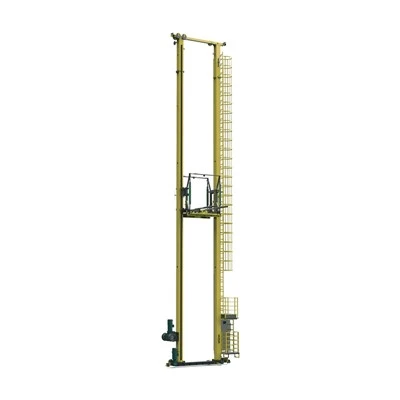
Vertical Conveyor Systems At the end of the day, material handling equipment isn’t just metal and motors. It’s the backbone of every operation, and the right equipment can make work easier, safer, and more profitable. The myth that it has to be one-size-fits-all is just that: a myth. My team and I have seen the proof in every client we’ve worked with: the pharmaceutical plant that cut product breakage, the bakery that fit into their narrow aisles, the e-commerce fulfillment center that reduced labor costs. If you’re tired of standard equipment that doesn’t work for your unique operation, you don’t have to settle. Our team is here to listen, understand your challenges, and build a custom material handling solution that works for you. Reach out to start a conversation about your needs, and let’s figure out how to make your equipment work for your business.
References
- Material Handling Industry of America. (2022). Custom Material Handling Solutions: Trends and Best Practices. MHI Global.
- Occupational Safety and Health Administration. (2023). Ergonomic Guidelines for Material Handling Equipment in Industrial Workplaces. U.S. Department of Labor.
- Smith, J. et al. (2021). The Impact of Custom Material Handling on Supply Chain Efficiency. Journal of Industrial Engineering and Operations Management, 14(2), 89–105.
- Global Cold Storage Association. (2022). Equipment Customization for Low-Temperature Warehouse Operations. GCSA Annual Report.
- U.S. Small Business Administration. (2023). Cost-Benefit Analysis of Custom Industrial Equipment for Small Manufacturers. SBA Office of Advocacy.
Anhui Rayo Automation Technology Co., Ltd.
With abundant experience, we are one of the most professional material handling equipment manufacturers and suppliers in China. Please feel free to wholesale advanced material handling equipment in stock here and get quotation from our factory. All customized products are with high quality and competitive price.
Address: No.28 Yongzhen Road, Wuhu Area, China (Anhui) Pilot Free Trade Zone
E-mail: ahry@ahrayo.com
WebSite: https://www.rayosmart.com/
