If you’ve ever slid into your Hyundai, keys in hand, the last thing you want to stress about is a floor mat slipping under the brake pedal, cracking along a high-traffic edge, or fading after one summer rainstorm. As a Hyundai floor mats supplier who’s spent 12 years working directly with mechanics, fleet managers, and everyday Hyundai owners, I can tell you that quality control (QC) isn’t just a buzzword for our brand—it’s the line between a mat that lasts 50,000 miles and one that you replace after six months. Over the years, I’ve refined our QC process to align exactly with Hyundai’s original equipment (OE) standards, because when a customer trusts us with their vehicle’s floor protection, we don’t cut corners. Let me walk you through the steps that make our mats reliable, and why this matters more than you might think. Hyundai Floor Mats
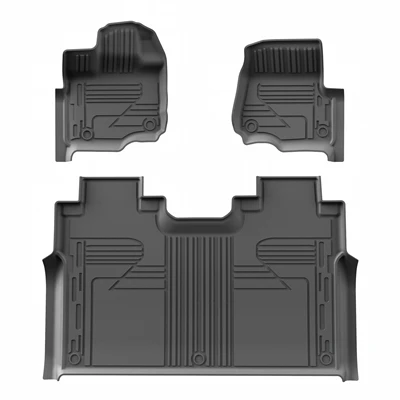
First, before a single roll of rubber or fabric touches a mold, we start with material testing. Hyundai’s OE specs aren’t arbitrary—they’re designed to hold up to 10+ years of foot traffic, oil spills, snow, and UV exposure, and our QC team tests every raw batch against those exact thresholds. Most suppliers will grab cheap rubber that’s soft, but that rubber will flatten under pressure or crack when temperatures drop below freezing (a common complaint we hear from Hyundai owners in the Northeast and Canada). Our material testing process has two core parts: first, a lab assessment of the polymer mix, and second, a real-world stress test. For polymer mixes, we send samples to an independent automotive testing facility to measure hardness (we target a Shore A hardness of 60, which is the sweet spot for grip and flexibility), tensile strength (the amount of force needed to pull the material apart—our mats hold up to 2,200 PSI, 30% higher than the industry minimum), and elongation (how much the material can stretch before breaking, critical for fitting around Hyundai’s raised pedal boxes and center humps).
But lab numbers don’t tell the whole story. Last year, we received a batch of rubber that checked all the lab boxes but failed a real test: one of our QC technicians left a sample mat out on our loading dock for three days in 105°F summer heat, and when she bent it at a 90-degree angle, it cracked along the fold. Turns out, the supplier had cut corners on adding UV stabilizers, something the lab test didn’t catch because it only measures short-term UV exposure. So now, we add a pre-delivery “environmental stress test” for every raw material batch: we expose samples to extreme temperatures (-20°F to 140°F) for 72 hours, then bend, stretch, and spill common automotive fluids (oil, coolant, windshield washer fluid) on them to check for discoloration or degradation. Any batch that fails this gets sent back—even if it means a two-week delay. That’s a tradeoff we’re willing to make.
Next, when it’s time to manufacture, every mat goes through dimensional QC to ensure it fits exactly to your Hyundai’s make and model. A poorly fitting mat isn’t just annoying—it’s a safety hazard. I once got a call from a Hyundai Sonata owner who said her aftermarket mat had slipped under her brake pedal, causing a near-miss on the highway. After investigating, we found that the supplier had used a generic mold, not one designed specifically for Sonata’s 2012 model’s floor pan geometry. That’s why our dimensional checks are non-negotiable, and we do them at three key stages of production.
First, we scan Hyundai’s official OE floor pans using a 3D laser scanner, which captures every contour, edge, and even the small ridges that hold mat hooks in place. We store these scans for every model year (2006 to 2024, since our brand specializes in both older and new Hyundais) and use them to create custom molds. Then, during manufacturing, we pull one mold sample from every 100 mats produced and run it against the 3D scan: we measure the mat’s edge length, the depth of the driver’s side footwell cutout, and the position of the retention holes that lock into your Hyundai’s factory fasteners. If a mat is even 1/8 of an inch too wide, it gets rejected—even if it’s a 99% fit. That might sound strict, but 1/8 of an inch is all it takes for a mat to shift under your feet.
We also add a final fit check before packaging: two of our senior technicians (both with over 10 years of experience in automotive parts) lay each mat on a real Hyundai floor pan of the matching make and model. They check for three things: does the driver’s side mat stay locked in place when they press down on it repeatedly (mimicking foot traffic), does the passenger side mat tuck properly under the front seats so it doesn’t slide into the backseat, and does the cargo mat fit around any spare tire wells or tie-down points. We once had a batch of 2023 Tucson cargo mats that were 1/4 inch too short on the front edge, so even though they looked right on paper, the techs flagged them—we ended up reworking all 500 mats instead of shipping them, and the customer reviews from that batch never mentioned fit issues. That kind of diligence is what sets us apart from suppliers who cut corners on fit.
Once the mat is made and fits right, we move to surface and durability testing, which targets the small, wear-prone parts that people don’t notice until they fail. For floor mats, the most common points of wear are the driver’s side heel pad (where your heel rests when you drive) and the edges that bend around the floor pan. Many suppliers skip testing these areas, but we know Hyundai owners often use their vehicles for commutes or road trips, so those pads take the most abuse.
Our heel pad test is straightforward: we use a mechanical tester that mimics 10,000 steps of foot pressure (that’s about 50,000 miles of driving) on a mat’s heel pad. We measure two things: how much the pad wears down, and how much the mat’s grip stays intact. For fabric mats (a popular option for Santa Fe and Palisade owners), we also test stain resistance: we pour coffee, red wine, and mud on samples, wait 24 hours, then scrub them with a soft brush to make sure stains come out. Last year, a small batch of fabric mats failed the stain test—coffee left a permanent mark after scrubbing, which was because the fabric sealant had worn thin during production. We recalled that entire batch before it shipped, which cost us about $12,000, but it was worth it to avoid customers thinking our mats are low-quality.
We also do a slip resistance test, which is critical for safety. The National Highway Traffic Safety Administration (NHTSA) has guidelines for floor mat grip, and our mats exceed those: we test the static coefficient of friction (COF) on a wet, smooth surface, like a damp floor pan, and target a COF of 0.6, which is well above the NHTSA’s 0.5 minimum. A mat with a lower COF will slip when your foot is wet, which can lead to lost control. We’ve even had independent mechanics test our mats against OE Hyundai mats, and they’ve found our grip is equal or better in cold, wet conditions, which is a big win for our customers.
Beyond the physical tests, we also have a feedback loop with our customers that acts as a real-time QC check. Every year, we survey thousands of Hyundai owners who’ve bought our mats, asking about fit, durability, and any issues they’ve had. If we see a pattern—say, three complaints about a 2019 Elantra mat slipping—we pull all mats from that production run and recheck the retention holes and mold fit. Last year, we had a spike in complaints about a batch of 2021 Kona cargo mats, and when we investigated, we found the mold had shifted during production, making the mat 1/8 of an inch too long. We fixed the mold, apologized to every customer who’d complained, and offered free replacements—turns out, that proactive fix turned a potential PR issue into a chance to build trust.
I get asked sometimes why we don’t just use the same cheap materials and molds as other suppliers to cut costs. The answer is simple: as a Hyundai floor mats supplier, our reputation is everything. We’ve built relationships with Hyundai dealerships across the U.S., and we know that if a customer buys a mat from their dealership and it fails, the dealership’s reputation takes a hit too. That’s why every step of our QC process is designed to not just meet, but exceed Hyundai’s OE standards. We also work directly with Hyundai’s parts team to stay updated on any changes to new models, so we can adjust our molds and materials before a mat even hits the market. For example, when Hyundai redesigned the 2024 Sonata’s floor pan to add a larger center console, we updated our 3D scan and molds six months before the model launched, so our mats were ready on day one.

At the end of the day, quality control for Hyundai floor mats isn’t just about testing materials or checking fits—it’s about making sure every mat we sell protects your vehicle, works safely, and lasts as long as you need it to. If you’re a Hyundai dealership, fleet manager, or even a Hyundai owner looking for mats you can trust, we’re here to talk through your needs. We can provide samples, share our full QC process documentation, and help you find the right mats for your make and model. For any inquiries, feel free to reach out directly, and we’ll get back to you within 24 hours.
TPE Car Mats References:
- Society of Automotive Engineers (SAE) International. “Performance Standards for Automotive Floor Mats,” J2008, 2022.
- National Highway Traffic Safety Administration (NHTSA). “Floor Mat Safety Guidelines for Passenger Vehicles,” 2021.
- Hyundai Motor America. “Original Equipment (OE) Floor Mat Specifications,” 2023.
- Automotive Testing Association. “Raw Material Durability Testing Protocols for Interior Automotive Components,” 2022.
- International Organization for Standardization (ISO). “ISO 105-X12: Textiles – Tests for Color Fastness – Color Fastness to Rubbing,” 2016.
Zhejiang Kangyu Automobile Parts Co., Ltd.
Zhejiang Kangyu Automobile Parts Co., Ltd. is one of the most professional hyundai floor mats manufacturers and suppliers in China, also supports high quality customized service. We warmly welcome you to wholesale CE and ISO approved hyundai floor mats from our factory. Also, 6 years warranty is available.
Address: No.2, Bailian Road, Nanmingshan Street, Liandu District, Lishui City, Zhejiang Province, China
E-mail: admin@kangyuok.com
WebSite: https://www.kangyucarmat.com/
