As a seasoned player in the stainless steel wire mesh supply business, I’ve witnessed firsthand the intricate process that transforms raw materials into the reliable and versatile product we offer. In this blog, I’ll take you through the step-by-step journey of how stainless steel wire mesh is made, sharing insights that showcase the craftsmanship and precision behind our offerings. Stainless Steel Wire Mesh
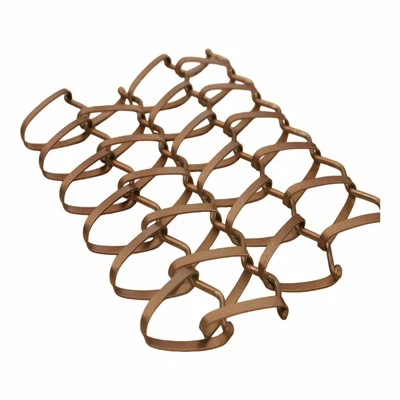
Step 1: Selecting the Right Stainless Steel
The foundation of high-quality stainless steel wire mesh lies in the selection of the appropriate stainless steel alloy. Different grades of stainless steel are available, each with unique properties tailored to specific applications. For instance, Grade 304 stainless steel is a popular choice due to its excellent corrosion resistance, making it suitable for a wide range of environments. Grade 316, on the other hand, contains molybdenum, which enhances its resistance to pitting and crevice corrosion, making it ideal for applications in marine or chemical environments.
At our company, we source our stainless steel from trusted suppliers who adhere to strict quality standards. We carefully evaluate the chemical composition, mechanical properties, and surface finish of the stainless steel to ensure it meets our specifications. This attention to detail at the initial stage sets the tone for the entire manufacturing process and ensures the production of wire mesh with consistent quality.
Step 2: Drawing the Stainless Steel Wire
Once the appropriate stainless steel alloy has been selected, the next step is to draw the stainless steel wire. Drawing is a process that involves pulling the stainless steel through a series of dies to reduce its diameter and increase its length. This process not only refines the wire’s dimensions but also improves its mechanical properties, such as tensile strength and ductility.
The drawing process begins with a large-diameter stainless steel rod, which is fed into a wire drawing machine. The rod passes through a series of dies, each with a slightly smaller diameter than the previous one. As the wire passes through the dies, it is subjected to high pressure, which causes it to elongate and reduce in diameter. This process is repeated multiple times until the desired wire diameter is achieved.
During the drawing process, lubricants are used to reduce friction between the wire and the dies, preventing damage to the wire and ensuring a smooth surface finish. The lubricants also help to dissipate heat generated during the drawing process, preventing the wire from overheating and losing its mechanical properties.
Step 3: Weaving the Wire Mesh
After the stainless steel wire has been drawn to the desired diameter, it is ready to be woven into wire mesh. Weaving is the process of interlacing the wires to create a grid-like pattern. There are several different weaving methods available, each with its own unique characteristics and applications.
The most common weaving method for stainless steel wire mesh is the plain weave, also known as the square weave. In a plain weave, the wires are woven over and under each other in a simple, alternating pattern. This creates a mesh with a uniform appearance and a high degree of stability. Plain weave wire mesh is commonly used in applications where a high level of filtration or separation is required, such as in industrial filters or sieves.
Another popular weaving method is the twill weave, which is similar to the plain weave but with a slightly different pattern. In a twill weave, the wires are woven over and under two or more wires at a time, creating a diagonal pattern. This gives the mesh a more open structure and a higher degree of flexibility. Twill weave wire mesh is commonly used in applications where a high level of airflow or visibility is required, such as in window screens or ventilation grilles.
In addition to plain and twill weaves, there are several other weaving methods available, including Dutch weave, reverse Dutch weave, and lock crimp weave. Each of these weaving methods has its own unique characteristics and applications, and the choice of weaving method depends on the specific requirements of the application.
Step 4: Heat Treatment
After the wire mesh has been woven, it is subjected to a heat treatment process to improve its mechanical properties and corrosion resistance. Heat treatment involves heating the wire mesh to a specific temperature and then cooling it at a controlled rate. This process helps to relieve internal stresses in the mesh, improve its strength and ductility, and enhance its resistance to corrosion.
The heat treatment process begins by heating the wire mesh in a furnace to a temperature of between 1,000°C and 1,100°C. The mesh is held at this temperature for a specific period of time, depending on the type of stainless steel and the desired properties of the mesh. After the mesh has been heated, it is cooled rapidly in a quenching medium, such as water or oil. This rapid cooling process helps to lock in the desired properties of the mesh and prevent the formation of undesirable phases.
In some cases, the wire mesh may be subjected to a secondary heat treatment process, such as annealing or tempering. Annealing involves heating the mesh to a lower temperature and then cooling it slowly to relieve internal stresses and improve its ductility. Tempering involves heating the mesh to a specific temperature and then cooling it at a controlled rate to improve its toughness and durability.
Step 5: Surface Treatment
After the heat treatment process, the wire mesh may be subjected to a surface treatment to improve its appearance and corrosion resistance. Surface treatment involves applying a protective coating or finish to the surface of the mesh to prevent it from rusting or corroding.
One of the most common surface treatments for stainless steel wire mesh is electroplating. Electroplating involves depositing a thin layer of metal, such as nickel or chromium, onto the surface of the mesh using an electrochemical process. This layer of metal provides a protective barrier against corrosion and gives the mesh a shiny, metallic appearance.
Another common surface treatment for stainless steel wire mesh is powder coating. Powder coating involves applying a dry powder to the surface of the mesh and then heating it to fuse the powder into a smooth, durable finish. Powder coating provides a thicker and more durable protective coating than electroplating and is available in a wide range of colors and finishes.
In addition to electroplating and powder coating, there are several other surface treatments available for stainless steel wire mesh, including painting, galvanizing, and passivation. The choice of surface treatment depends on the specific requirements of the application and the desired appearance and performance of the mesh.
Step 6: Quality Control
Throughout the manufacturing process, strict quality control measures are implemented to ensure that the stainless steel wire mesh meets our high standards of quality and performance. Quality control begins with the inspection of the raw materials to ensure they meet our specifications. During the drawing, weaving, heat treatment, and surface treatment processes, the mesh is inspected at regular intervals to ensure that it is being manufactured to the correct dimensions and specifications.
After the manufacturing process is complete, the wire mesh is subjected to a final inspection to ensure that it meets our quality standards. This inspection includes a visual inspection to check for any surface defects, such as scratches or dents, as well as a physical inspection to check the dimensions and mechanical properties of the mesh. Samples of the mesh are also tested in our laboratory to ensure that it meets the required standards for corrosion resistance, tensile strength, and other properties.
Conclusion
As you can see, the process of making stainless steel wire mesh is a complex and intricate one that requires a high level of skill and precision. From the selection of the raw materials to the final inspection, every step of the process is carefully controlled to ensure that the mesh meets our high standards of quality and performance.
At our company, we are committed to providing our customers with the highest quality stainless steel wire mesh products. We use only the finest materials and state-of-the-art manufacturing processes to ensure that our mesh is durable, reliable, and meets the specific requirements of our customers. Whether you need wire mesh for industrial filtration, architectural applications, or any other use, we have the expertise and experience to provide you with the perfect solution.
Hexagonal Wire Mesh If you are interested in purchasing stainless steel wire mesh from us, please do not hesitate to contact us. Our team of experts will be happy to discuss your requirements and provide you with a free quote. We look forward to the opportunity to work with you and to help you find the perfect wire mesh solution for your needs.
References
- ASM Handbook, Volume 1: Properties and Selection: Irons, Steels, and High-Performance Alloys
- Metals Handbook Desk Edition, 2nd Edition
- ASTM International Standards for Stainless Steel Products
- Technical Literature from Stainless Steel Manufacturers and Suppliers
Anping Chenran Wire Mesh Co., Ltd.
We’re well-known as one of the leading stainless steel wire mesh manufacturers and suppliers in China. With a professional production team, we are able to meet the needs of the majority of our customers. Please rest assured to buy high quality stainless steel wire mesh in stock here from our factory.
Address: 500 Meters North of Guozhuang Village, Daziwen Town, Anping County, Hengshui City, Hebei, China
E-mail: sales@chenranwiremesh.com
WebSite: https://www.chenranwiremesh.com/
