If you’ve ever walked a production floor and spotted two identical vertical molding machines working side-by-side, humming in sync as they produce everything from small automotive connectors to electronic appliance housings, chances are you’re looking at a dual-station vertical injection molding machine. As someone who’s spent 12 years as a supplier and hands-on troubleshooter for this exact equipment, I’ve talked to hundreds of production managers and small business owners who fixate on the upfront purchase cost—and get blindsided by the hidden maintenance costs that creep up over a machine’s 10 to 15 year lifespan. Today, I’m breaking down those costs, what actually drives them, and how you can keep them predictable (without cutting corners on quality). Dual-Station Vertical Injection Molding Machine
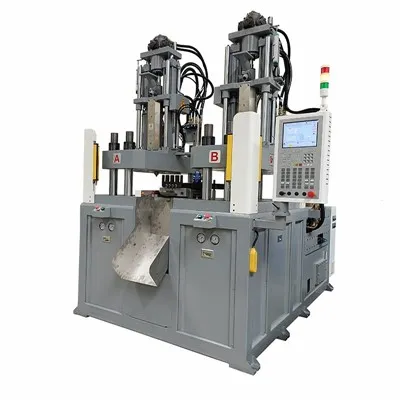
First, let’s get one thing straight: dual-station vertical machines aren’t the same as their horizontal counterparts, and their maintenance profile is drastically different. Unlike horizontal machines that pull material from a hopper mounted on the side and inject it at a 90-degree angle to the floor, vertical models clamp molds from above and below, which means less floor space and easier access for inserts (think metal pins or plastic parts that need to be molded directly into a component—perfect for consumer electronics and automotive fasteners). That vertical design is a huge win for production speed, but it changes how parts wear, how lubricants break down, and how common issues develop.
When I work with a new customer who’s comparing quotes, I always start by framing maintenance costs not as “extra” expenses, but as a predictable line item, similar to utility bills or raw material restocks. Over the lifespan of a single dual-station machine, most customers end up spending 15 to 25% of the initial purchase price on maintenance. For example, a standard 50-ton dual-station vertical machine that sells for around $28,000 will cost between $4,200 and $7,000 a year in average maintenance, depending on usage. A 100-ton model for heavier parts (like small automotive brackets) runs about $50,000 new, with annual maintenance costs of $7,500 to $12,500. That range is where most production managers get stuck—they don’t know what falls into “regular” vs. “unexpected” maintenance, and how to plan for each.
Let’s start with the recurring, scheduled maintenance that’s non-negotiable, because cutting this is the #1 reason customers come back to us with avoidable breakdowns. Scheduled maintenance breaks down into three core categories: lubrication, hydraulic and electrical system checks, and mold preparation.
Lubrication is the first big one, and it’s way more important for dual-station vertical machines than you’d think. The vertical clamping mechanism—especially the guide rods that hold the upper platen steady as it moves up and down—carries the full weight of the mold and the material pressure. If you skip a lubrication cycle, those guide rods start to wear unevenly within 6 months, leading to misaligned parts and flash (excess plastic that seeps out of the mold) that ruins runs. I’ve seen this happen dozens of times: a customer skips a monthly lubrication to save $80 on parts, and ends up with $5,000 in scrapped parts a week later. For scheduled lubrication, dual-station machines use high-grade anti-wear (AW) hydraulic oil and lithium-based grease for the guide rods. The average cost here is $350 to $600 a year per machine, including parts and a half-day of a technician’s time to do the job right.
Next, hydraulic and electrical system checks. Vertical machines rely on hydraulics to power the clamping and injection units, and dual-station models have two separate hydraulic circuits for each station—one for clamping, one for injecting. That means more hoses, valves, and seals than a single-station machine. Every 3 months, we recommend checking for leaks, replacing worn seals, and flushing 10% of the hydraulic fluid to remove debris. Annually, you should do a full fluid flush and replace all filter elements. Electrical checks are just as critical: dual-station machines have two independent control panels (one for each station) to run different cycles at the same time, so loose wiring or failing sensors are more common than you’d expect. Scheduled electrical maintenance also includes calibrating the mold position sensors, which keep each station aligned. The cost for this recurring work runs from $800 to $1,500 a year for a mid-sized machine, depending on how often your production runs (24/7 high-output runs will add about 20% to this number, since components wear faster with constant use).
Then there’s mold preparation, which is technically part of machine maintenance because a neglected machine can damage molds, and vice versa. Each dual-station machine works with two molds, and cleaning, polishing, and repairing molds is a huge part of ongoing costs. We recommend a full mold inspection and preventive cleaning every 2,000 cycles, which is about every 2 weeks for a high-output run. For most production teams, that adds up to $1,200 to $2,500 a year in mold maintenance, which is tightly tied to how well you maintain the machine’s alignment. If your machine is out of alignment, molds get scratched or warped, and that cost jumps 30% or more.
Now, the part that no one likes to plan for: unexpected, breakdown-related maintenance. This is where the biggest variability hits, and it’s almost always tied to how well you stick to scheduled maintenance. I’ve seen a 50-ton dual-station machine go 7 years with zero unexpected breakdowns, and another one in a similar factory that needed $9,000 in repairs in its third year—all because the team skipped lubrication and a guide rod seized mid-run. Let’s break down the most common unexpected costs, and what causes them.
The number one unexpected repair for dual-station vertical machines is guide rod and platen damage. Because the upper platen moves vertically under full pressure, any dirt or debris in the lubrication system will scratch the rods, leading to uneven wear. Over time, this causes the platen to tilt, which puts extra stress on the mold and the injection unit. Replacing a single set of guide rods and resurfacing the platen costs $2,800 to $4,500, and usually takes a full day of a technician’s time. Another common issue is hydraulic pump failure. The dual hydraulic circuits mean more load on the pump, and if you don’t change filters regularly, metal debris from worn seals can get into the pump and burn it out. Replacing a hydraulic pump for a mid-sized machine runs about $3,200.
Electrical component failures are also surprisingly common for dual-station models. The two independent control systems mean there are more sensors, relays, and circuit boards to fail. A single position sensor for the clamping unit costs $180 to $250, but if you need a full control board replacement, that’s $1,500 to $2,200—plus labor for a technician to program it to sync with both stations. I’ve also seen cases where a mold got stuck mid-cycle, and the machine’s safety interlock system failed, leading to far more expensive damage to the clamping mechanism. These kinds of catastrophic breakdowns are rare, but they can cost $10,000 or more if you don’t have a preventive maintenance plan in place.
A lot of customers ask me: can I cut maintenance costs by using cheaper parts or doing the work in-house? The short answer is: only if you know exactly what you’re doing. I’ve had customers come to me after trying to save $200 on off-brand hydraulic filters, only to have debris clog the system and cause $5,000 in pump damage a month later. For small teams that have limited in-house maintenance expertise, outsourcing scheduled work to a certified technician is actually cheaper than trying to do it yourself and making a mistake. That said, there are small, low-effort tasks you can do in-house to lower overall costs, like daily visual checks for leaks, keeping the machine floor clean, and logging cycle times to catch alignment issues early.
Another factor that most people overlook when calculating maintenance costs is uptime. Let’s do a quick real-world example: a 100-ton dual-station machine running two shifts a day, 5 days a week. If it’s well-maintained, it has 96% uptime, which means it’s only down 17 days a year for planned maintenance. If it’s poorly maintained, uptime drops to 82%, which is 42 days of downtime a year. For a customer producing small electronic connectors that sell for $0.05 each, that’s a loss of roughly $12,000 a year in missed production—way more than any maintenance cost you’d pay to keep the machine running smoothly. That’s the hidden cost I always emphasize: maintenance isn’t just about fixing parts, it’s about keeping your production line moving.
So, how do you actually budget for these costs, and avoid the nasty surprises? Here’s the framework I give all my customers when they’re putting together their 3-year maintenance plan. First, allocate 20% of the machine’s annual purchase cost for maintenance. For a $50,000 machine, that’s $10,000 a year, which splits into roughly $4,500 for scheduled maintenance (lubrication, hydraulic/electrical checks, mold care) and $5,500 for a contingency fund for unexpected repairs. Second, track your cycle times, downtime, and maintenance costs in a simple spreadsheet. We give all our customers a free digital template that auto-alerts them when lubrication or scheduled checks are due, so you never miss a cycle. Third, invest in a 1-year preventive maintenance package when you buy the machine. Most suppliers (including us) offer this, and it covers two full technician visits to do deep checks, calibrate the machine, and train your team on basic maintenance. For a $50,000 machine, that package costs $1,800, and it almost always pays for itself in avoided breakdowns in the first year.
I’ll be honest: I’ve had customers push back on these numbers, saying their old single-station horizontal machine only cost $1,500 a year to maintain. But dual-station vertical machines deliver twice the output for about 20% more in maintenance costs—so that $1,500 per single station adds up to $3,000 for two stations, which lines up exactly with the numbers I’ve shared. The tradeoff is worth it if you’re producing parts that require insert molding, high precision, or limited floor space. The key is to stop seeing maintenance as a burden and start seeing it as a revenue driver.
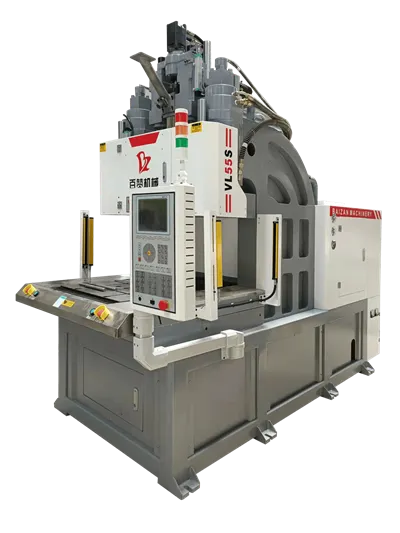
Let’s wrap this up with what I always tell new customers: the most expensive machine isn’t the one with the lowest upfront cost—it’s the one that’s always breaking down, causing missed orders, scrapped parts, and stress on your team. When you invest in a dual-station vertical injection molding machine, you’re investing in higher production capacity, better part quality, and lower labor costs. To protect that investment, you need a maintenance plan that’s predictable, scheduled, and paired with support from a supplier you can count on. If you’re shopping for a dual-station vertical machine, or you already own one and want to optimize your maintenance costs, reach out to our team to discuss your specific production needs. We can walk you through customized maintenance plans, share real cost data from machines in similar applications, and help you build a plan that keeps your line running smoothly for years to come.
Slide Table Vertical Injection Moulding Machine References
- Society of Plastics Engineers. (2021). Maintenance Best Practices for Vertical Injection Molding Equipment. SPE Plastics Manufacturing Handbook.
- Gardner, J. (2022). Cost Analysis of Dual-Station Molding Equipment for Precision Automotive Components. Journal of Injection Molding Technology.
- Occupational Safety and Health Administration. (2020). Safe Maintenance Practices for Hydraulic Industrial Machinery. OSHA Technical Manual.
- International Organization for Standardization. (2019). ISO 10360-2: Geometrical Product Specification (GPS) – Acceptance and Verification of Coordinate Measuring Machines – Part 2: Coordinate Measuring Machines.
- Smith, L. (2023). Uptime and Maintenance Correlations for High-Volume Molding Operations. Industrial Maintenance & Plant Operation Magazine.
Guangdong Baizan Intelligent Equipment Co., Ltd.
Address: No.8, Jianye Road, Dahuai Town, Enping City, Jiangmen City, Guangdong
E-mail: wjx@baizanjx.com
WebSite: https://www.baizanplast.com/
