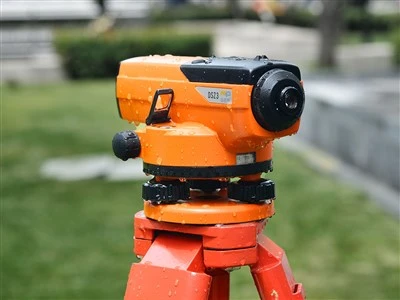
Hey there! As a long – time supplier of surveying accessories, I’ve seen firsthand the game – changing impact that reflectorless total stations have on the surveying industry. These bad boys are not just another tool in the box; they’re revolutionizing the way we approach surveying tasks. So, let’s dive into what makes these reflectorless total stations so special and what functions they bring to the table. Surveying Accessories
1. Distance Measurement without Reflectors
One of the most mind – blowing features of a reflectorless total station is its ability to measure distances without the need for a reflector. In traditional surveying, using reflectors was a pain in the neck. You had to set them up properly, make sure they were visible from the total station, and then wait for an accurate measurement. It was time – consuming, especially in hard – to – reach areas.
But with a reflectorless total station, it’s a whole new ballgame. You can aim the instrument at a target—whether it’s a building wall, a rock, or a far – off tree—and get an accurate distance reading in no time. This is a huge time – saver, especially for large – scale projects like mapping a forest or measuring the dimensions of a big industrial complex. You don’t have to waste time sending a crew out to place reflectors every few meters. In a construction project, for example, you can quickly measure the distance between different parts of the building site, even if there are obstacles in the way. This speed and efficiency mean that you can get your survey done faster and move on to the next phase of your project.
2. Angle Measurement
Just like regular total stations, reflectorless ones are great at measuring angles. They can give you both horizontal and vertical angles with a high degree of accuracy. This is super important in surveying because angles are used to determine the orientation and shape of the land or objects you’re measuring.
Let’s say you’re surveying a piece of land for a new housing development. You need to know the angles between different boundaries to accurately plot out where the houses will go. The reflectorless total station can provide precise angle measurements, which are crucial for creating accurate maps and plans. Architects and engineers rely on these angle measurements to design buildings that fit perfectly into the surveyed area. And in road construction, accurate angle measurements are necessary to ensure that the roads curve and intersect at the right places.
3. 3D Point Positioning
Reflectorless total stations can also do 3D point positioning. This means that you can determine the exact position of a point in three – dimensional space (X, Y, and Z coordinates). This is extremely useful in modern surveying, where we often need to create detailed 3D models of the terrain or structures.
For instance, in a mining project, you can use a reflectorless total station to map the underground tunnels in 3D. You can measure the position of every point inside the tunnel, which helps in designing the mining operations more efficiently. In urban planning, 3D point positioning is used to create digital models of cities. These models can show the height, shape, and location of buildings, which is essential for analyzing the impact of new construction projects on the existing environment.
4. Data Collection and Storage
These total stations come with built – in data collectors that can store a large amount of survey data. You can collect data on distances, angles, and point positions, and the instrument will save it all for later analysis. This is a huge advantage because you don’t have to rely on manual note – taking, which can be prone to errors.
The data can be easily transferred to a computer for further processing. You can use specialized software to create maps, generate reports, or perform calculations. For example, if you’re surveying a historical site, you can collect all the data with the reflectorless total station and then use software to create a 3D virtual model of the site. This digital model can be used for preservation purposes, research, or even for educational tours.
5. Remote Sensing
Reflectorless total stations can act as remote sensing devices. They can be used to collect data from a distance, which is very handy in situations where it’s dangerous or difficult to get close to the target.
In a disaster – affected area, such as after an earthquake or a flood, you can use a reflectorless total station to measure the damage to buildings and infrastructure from a safe distance. You can collect data on the changes in the shape and position of structures, which helps in assessing the extent of the damage and planning the reconstruction. In environmental monitoring, you can use the instrument to measure the movement of glaciers or the erosion of coastlines without having to be on the ground.
6. Automatic Target Recognition (ATR)
Many reflectorless total stations are equipped with Automatic Target Recognition technology. This means that the instrument can automatically detect and lock onto a target, even in low – visibility conditions.
In a busy construction site with lots of dust and debris, the ATR feature can save a lot of time. You don’t have to spend hours manually aligning the instrument with the target. The total station will do it for you, and it will also keep track of the target as it moves. This is especially useful when you’re measuring the movement of objects, such as the settling of a building foundation over time.
7. Real – Time Monitoring
Reflectorless total stations can be used for real – time monitoring. You can set up the instrument at a fixed point and continuously monitor the position of a target. This is useful in various applications, such as monitoring the stability of a bridge or a dam.
If there are any changes in the position of the monitored points, the total station will detect them immediately. This allows engineers to take preventive measures before a serious problem occurs. In a landslide – prone area, real – time monitoring can help in predicting and preventing disasters by detecting any early signs of ground movement.
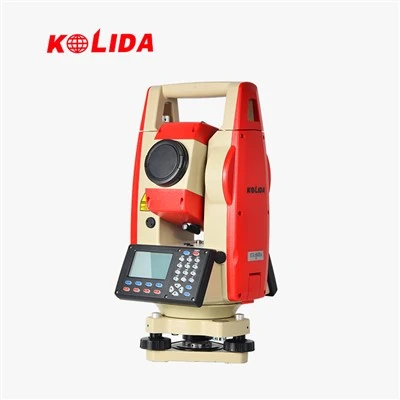
In conclusion, reflectorless total stations are an essential part of modern surveying accessories. They offer so many functions that make surveying tasks faster, more accurate, and safer. Whether you’re a small – scale land surveyor or working on a large – scale infrastructure project, these instruments can be a game – changer.
Total Station If you’re in the market for high – quality reflectorless total stations or other surveying accessories, don’t hesitate to reach out. We’ve got a wide range of products that can meet your specific needs. Let’s start a conversation about how we can help you take your surveying projects to the next level.
References
- Dorner, D., & Räisänen, C. (2018). Total Station Surveying. Springer.
- Wolf, P. R., & Ghilani, C. D. (2012). Elementary Surveying: An Introduction to Geomatics. Pearson.
Shandong Surveying Information Technology Co., Ltd.
As one of the most experienced surveying accessories manufacturers in China, we have world-leading production equipment and strong manufacturing capabilities. Please feel free to buy high quality surveying accessories for sale here from our factory. We also accept customized orders.
Address: No. 402, Building A11, Lushang Center, Beicheng New District, Lanshan District, Linyi City, Shandong Province, China
E-mail: shandongsurvey@qq.com
WebSite: https://www.nmpsurveying.com/
