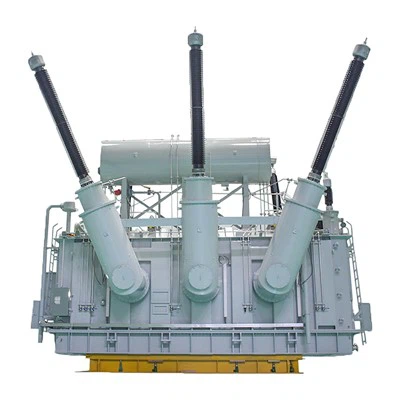
As a seasoned provider in the realm of Conventional Power Transformers, I often find myself delving into the nuances of various testing procedures to ensure the optimal performance and reliability of our products. One such crucial test is the open – circuit test, a fundamental diagnostic tool that offers invaluable insights into the characteristics of a transformer. Conventional Power Transformer
The Purpose of the Open – Circuit Test
The open – circuit test, also known as the no – load test, is primarily conducted to determine the core losses and the magnetizing current of a Conventional Power Transformer. Core losses, which consist of hysteresis and eddy current losses, are significant factors that affect the overall efficiency of the transformer. These losses occur within the transformer’s core, which is typically made of laminated steel to reduce eddy currents.
By performing the open – circuit test, we can accurately quantify these losses. This information is essential for designing more efficient transformers, as minimizing core losses directly translates to lower operating costs and a longer lifespan for the transformer. Additionally, the test helps us understand the magnetizing current, which is the current required to establish the magnetic field in the transformer’s core. A high magnetizing current can indicate issues such as core saturation or poor core material quality.
How the Open – Circuit Test is Conducted
The setup for an open – circuit test is relatively straightforward. The low – voltage (LV) side of the transformer is connected to a rated voltage source, while the high – voltage (HV) side is left open – circuited. This configuration allows us to simulate the no – load condition of the transformer, where there is no load connected to the secondary winding.
We use precise metering equipment to measure the voltage, current, and power on the LV side. The applied voltage is usually the rated voltage of the LV winding. Since the HV side is open, the current flowing through the transformer is primarily the magnetizing current and the current required to overcome the core losses.
The power measured during the open – circuit test is equal to the core losses of the transformer. This is because with no load on the HV side, there is no significant power transfer to the secondary side, and the power input is mainly consumed in the core.
Analyzing the Test Results
Once the open – circuit test is completed, we analyze the results to gain a comprehensive understanding of the transformer’s performance. First, we calculate the magnetizing current, which is the RMS value of the current measured on the LV side. A normal magnetizing current for a well – designed Conventional Power Transformer is typically a small percentage (usually around 2 – 5%) of the rated current of the winding.
Next, we determine the core losses. By using the measured power and voltage values, we can calculate the core loss resistance and the magnetizing reactance. The core loss resistance represents the equivalent resistance that accounts for the core losses, while the magnetizing reactance represents the inductive property of the core.
These values are crucial for modeling the transformer’s behavior in electrical circuit analysis. They can be used to predict the performance of the transformer under different operating conditions, such as varying loads and voltages.
Significance for Quality Control
In our role as a Conventional Power Transformer supplier, the open – circuit test plays a pivotal role in quality control. It serves as an early detection mechanism for potential issues in the transformer’s core. For example, if the measured core losses are higher than the expected values, it could indicate problems such as excessive eddy currents due to poor lamination in the core or incorrect core material selection.
By conducting the open – circuit test on every transformer before it leaves our facility, we can ensure that only high – quality products reach our customers. This not only enhances customer satisfaction but also reduces the risk of costly failures in the field.
Impact on Transformer Design
The data obtained from the open – circuit test also has a profound impact on the design of Conventional Power Transformers. Engineers can use the test results to optimize the core design, including the choice of core material, the number of laminations, and the shape of the core.
For instance, if the test reveals high magnetizing current, we can explore using a better – quality core material with lower magnetic reluctance. This can reduce the magnetizing current and improve the overall efficiency of the transformer. Additionally, by adjusting the lamination thickness, we can further reduce eddy current losses.
Case Studies: Real – World Applications
Let’s take a look at some real – world examples of how the open – circuit test has been beneficial in our operations. In one case, we had a batch of transformers that were showing slightly higher than normal core losses during the open – circuit test. Further investigation revealed that there was a problem with the lamination process, resulting in increased eddy currents.
We were able to identify the issue early on and rectify it before the transformers were shipped to the customer. This saved us from potential warranty claims and customer dissatisfaction.
In another instance, the open – circuit test results for a new transformer design indicated that the magnetizing current was too high. Based on this feedback, our design team modified the core material and adjusted the core dimensions. The subsequent open – circuit test showed a significant reduction in magnetizing current, leading to a more efficient transformer design.
Future Developments in Open – Circuit Testing
As technology continues to evolve, so does the field of open – circuit testing for Conventional Power Transformers. We are seeing the emergence of more advanced testing equipment that offers higher accuracy and faster testing times. These new tools use digital signal processing and real – time data analysis techniques to provide more detailed and precise information about the transformer’s core characteristics.
Additionally, the integration of smart sensors and IoT (Internet of Things) technology into transformers is enabling continuous monitoring of core losses and magnetizing current. This allows for proactive maintenance and early detection of potential issues, further improving the reliability and efficiency of power transformers.
Conclusion
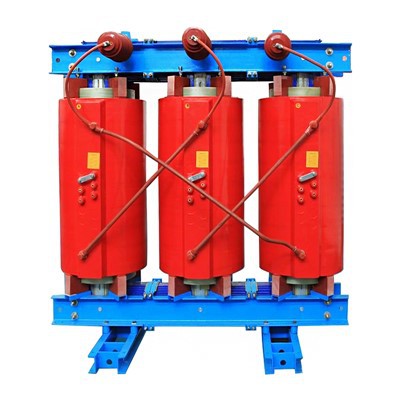
In conclusion, the open – circuit test is an indispensable tool for understanding the performance and characteristics of Conventional Power Transformers. As a supplier, we rely on this test to ensure the quality of our products, optimize their design, and provide our customers with reliable and efficient transformers.
Structural Transformer If you are in the market for high – quality Conventional Power Transformers or have any questions about our products, we encourage you to contact us for a procurement discussion. Our team of experts is ready to assist you in finding the best transformer solutions for your specific needs.
References
- Electric Machinery Fundamentals by Stephen J. Chapman
- Power System Analysis and Design by J. Duncan Glover, Mulukutla S. Sarma, and Thomas J. Overbye
- Transformer Engineering: Design, Technology, and Diagnostics by G. K. Dubey
Nantong Yawei New Energy Technology Co., Ltd.
As one of the most professional conventional power transformer manufacturers and suppliers in China, we’re featured by quality products and good service. Please rest assured to wholesale durable conventional power transformer made in China here from our factory. Customized orders are welcome.
Address: Room 28-101, Building 27 and 28, No.333 Kaiyuan Avenue, Sunzhuang Subdistrict, Hai’an City, Nantong City, Jiangsu Province, China
E-mail: admin@nantongyawei.com
WebSite: https://www.nantongyawei.com/
